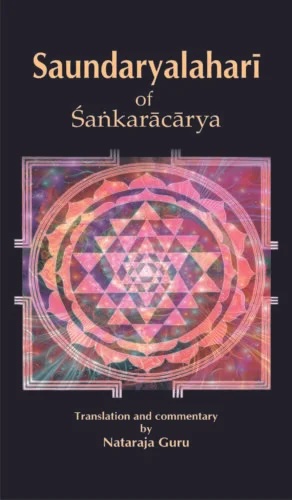
Saundarya Lahari of Sankaracarya
(The Upsurging Billow of Beauty)
by Nataraja Guru
This detailed commentary views the Saundarya Lahari compilation of 100 verses in praise of the Devi as Advaita Vedanta itself. The absolute joy of Advaita is presented in a pictorial language, subjectively as ananda, and objectively as Saundarya.
Procedure to Buy Books
- Email or call with the list of books required.
- Receive availability & pricing details.
- Make payment through the provided bank details / UPI.
- Share your full postal address and contact number.
- Books will be dispatched and tracking details shared.
Books may also be collected in person from the Gurukula office.
About This Book
Overview
The Saundaryalahari has fascinated and puzzled generations of scholars and laypersons; subject to continuing study and debate, till today, such details as the authorship of the 100 verses named the Saundaryalahari remain a matter of contention, particularly among scholars. While some attribute it to Shankara, others argue that the Saundaryalahari’s verses in praise of the Devi cannot have been authored by this staunch Vedantin; some argue that its value is essentially in the realm of what is loosely called “tantra,” while others extend the significance of the Saundaryalahari to include the preoccupations of Vedanta. Nataraja Guru is unequivocal in his belief that none other than Shankara could have composed this masterpiece of mystical poetry and identifies internal evidence in the verses themselves to support this view. The detailed commentary views the Saundaryalahari as Advaita Vedanta itself. The absolute Joy of Advaita is presented in a pictorial language, subjectively as ananda, and objectively as saundarya.
Meet the Author
