Who We Are
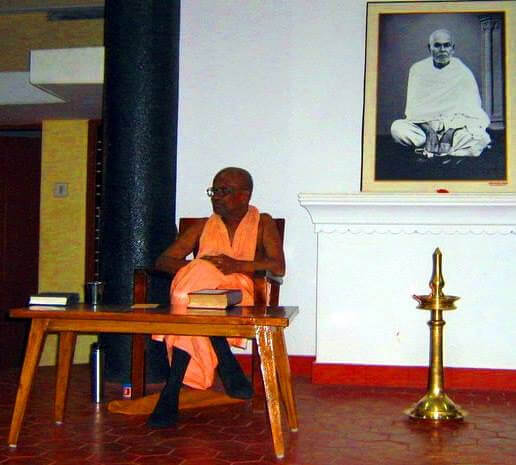
The 'Narayana Gurukula', also referred to as 'Gurukula' or 'Gurukula Foundation' is the name of an institution conforming to what is well known in the traditional life of India from most ancient times, which is also sometimes referred to as 'Mutt' or 'Ashram'.
Throughout the history of India one can see a model of Guru-disciple relationship where Guru shines the light of knowledge and wisdom on the disciple and the disciple, in turn, pay keen attention to Guru’s words and attends to Guru’s needs. This model can still be seen in India. This model is not unique to India, in its essence, as we can see similar models in the Socratic traditions and in some of the Christian traditions. It consists of a Guru (spiritual preceptor) and kula (family consisting of his disciples, who together constitute a spiritual family) headed by the teacher of wisdom.
In the present case they together follow the teachings and conform to the way of life represented by the Guru Narayana of South India (1854-1928) who in his own lifetime taught contemplative wisdom recognised as Advaita Vedanta (non-dual philosophy) or Brahmavidya (Science of the Absolute) which is none other than Atmavidya (Self-knowledge) conforming to the spirit of the Upanishads. In theory, Narayana Guru follows the Advaita philosophy of the great Sankaracharya (788 A. D.) in a revised, restated and revalued form. Thus, the Narayana Gurukula Foundation, unlike the 'Trusts' known in English Law, conforms to a special type of institution particularly belonging to the Indian background from most ancient times.
Our history
P. Natarajan (later Nataraja Guru), on arriving at home in Ernakulam, with the English Newspaper in hand that announced his passing the M.A. and L.T. degrees together, saw in the front room Narayana Guru resting in an easy chair and his own father, (Dr. Palpu) standing behind the chair. The son stood in front of the Guru. The first reaction that came from the Guru on hearing the examination result was, “everything is in full agreement.” As far as Natarajan was concerned, it was an extraordinary scene. Guru stood in front of him by making his father recede behind. In his own words, “Relativism was receding behind from his life and Absolutism was coming to the forefront.” Narayana Guru, though looking an ordinary country man wearing only a piece of cloth and an upper cloth, had already found place in his entire inner being as a mysterious person with transparent vision of life. Dr. Palpu, on a previous occasion, had expressed his wish seriously or otherwise, to dedicate one of his children, or even all of them, for the cause of Narayana Guru. Guru now reminded him of his words. Though there was no response from the father, the son was readily willing to dedicate himself to fulfilling his father’s words. A couple of days went by. When Guru was resting in a small hut in the northern region of then Travancore State (possibly in the Parur Taluk), Natarajan approached the Guru directly, and after proper salutations, told him that he was dedicating himself to the Guru. Guru felt very happy, and directed him to go and join the Advaita Ashram, Aluva. Guru with a smile added, “The Ashram will have an additional expenditure of just a piece of washing soap a day.”

One day Natarajan was walking along a village area in Kerala. Then he noticed a young man of his own age, sitting by the side of a stream and washing the cloths of his Guru. A wealthy man lived in that area, and by the side of his house was living a Sanskrit scholar teaching those who were interested in subjects like vyäkarańa (grammer), Kävya (Poetry), Nyäya (logic) and the like. The young man was one of the students. His doing such a service to his Guru was the mark of what in India had been known from ancient times as guru-śishya-pärasparya (bipolarity between a guru and disciple). “Why can’t this value be given its legitimate place in a modern system of education?” Such was the nature of challenge before Natarajan at that moment.
At daytime he went to the park nearby and meditated on the plans of the school he intended to actualize. The one side he did not think of was that of finance. By adding the word ‘kula’ to ‘Narayana Guru’, the person to whom he became a disciple and whom he always adored, he found a respectable name to the school. With these ideas deeply etched in his mind he went back to Narayana Guru and presented them before him. He blessed the disciple with three directives.
- A gurukula should be a place where guru and disciples live together forming a family (kula).
- Do not obstruct marriage.
- The whole world has to become a Gurukula.
Another directive he had already given to the disciple was, “Go far away, and do great things.” Many experienced people warned him not to proceed with such a dream-like project. But the great Guru’s blessing was all Natarjan needed.

The Gurukula is Born
Guru was not always available at the Advaita Ashram. Those who were taking care of the Ashram affairs were not mentally prepared to include this new and highly qualified disciple of the Guru in their group. His offer to work in the Advaita Ashram School without any remuneration was not approved, and instead a less qualified person was appointed as salaried teacher. Above all, the notice displayed at the entrance to the dining hall showing that those who had not paid boarding fee should not enter the hall, put him in more trouble. As the environment was becoming increasingly unbearable, he decided to escape from the scene altogether. The secret journey was to Coonoor in the Nilgiris where Swami Bodhananda, one of the disciples of the Guru, was then residing. Swami readily gave him asylum. Working out the plan for a new model school was the sole intention. It was then he recollected the village scene where a disciple was washing his Guru’s clothes while the Guru was bathing in the river.
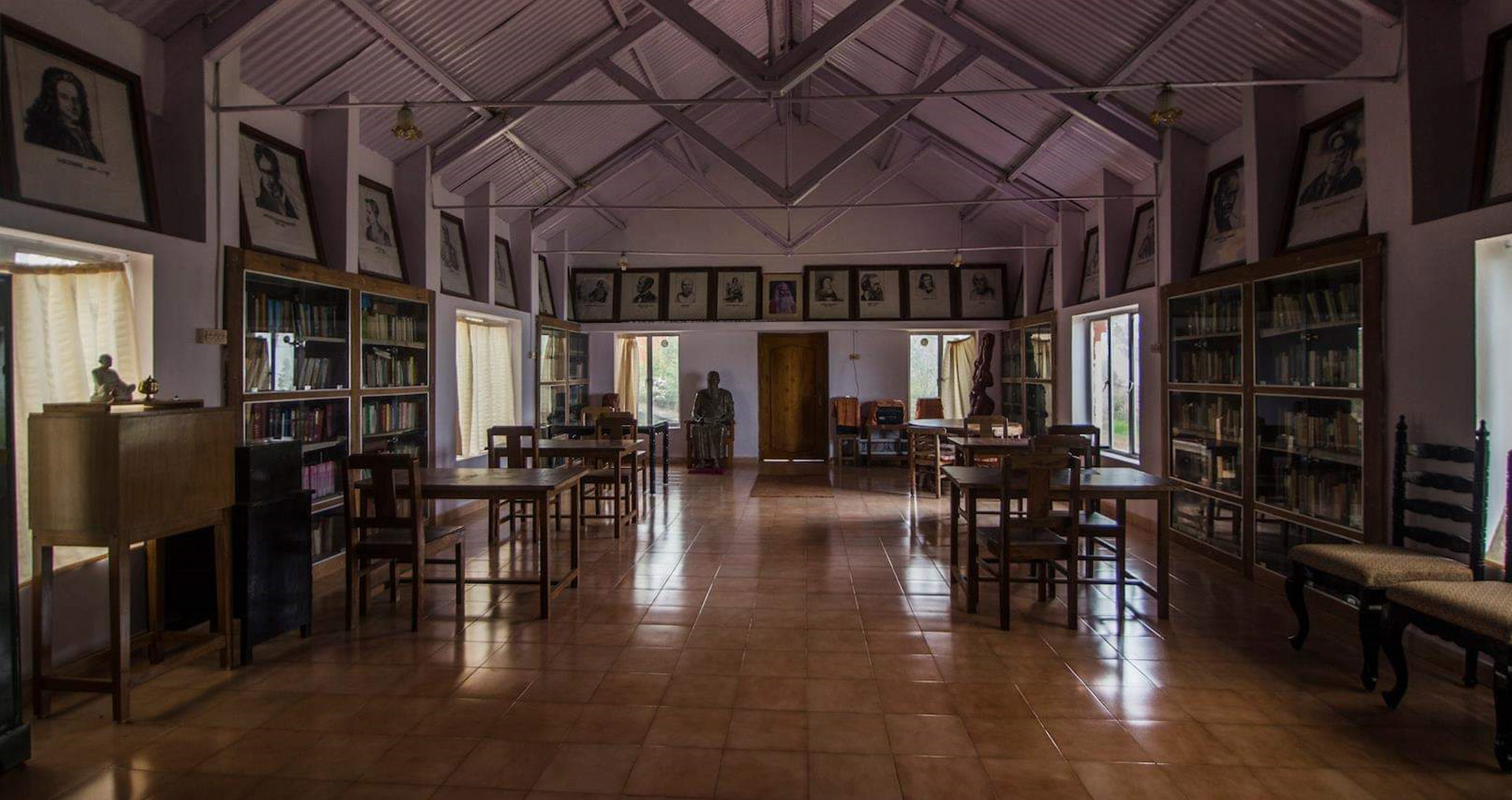
Later, a building that belonged to one Rama Swami became available for the time being to run the Gurukula of his dream. It was an unused building of the tea factory in Clevland Estate owned by Rama Swami. The building was permitted to be used free of any charge. Thus, the Gurukula was born really in the literal sense. The students were mainly the children of some who were interested in such experiments in the field of education. They were mainly from Trichur area, and there were twelve in number. Of course there were assistant teachers as well. To make the two ends meet, the Guru and disciples together had even to make street collections by performing group songs. Before long, it was informed that the entire estate, including the factory building, was going to be sold out and therefore the Gurukula should be shifted. In the meantime, the Head of the Gurukula had managed to get assigned four acres of land in the Fernhill area of Ooty, with the assistance of some high officials whom Nataraja Guru had come into contact by that time. The students and teachers moved to a cooly lane which became available nearby. The Head camped in a tent erected in the newly procured land. Narayana Guru made a visit to the Nilgiris in those days. He reached the hill next to the Gurukula land and looked at it with his blessing eyes. He remarked, “It is nice; it looks like heaven!” Later, on 8th of June 1924, the Foundation Stone for the new Gurukula building was laid.

The Gurukula Foundation is 'Public' and Open to All Seekers of the Absolute:
The Gurukula Foundation represents a body which is a judicial person represented by the Head of the Foundation who is the Guru for the time being. The foundation is both 'charitable' and 'public' in character as understood in law. In India it is more usual to refer to such an establishment as a Dharmasthapana (Foundation for the advancement of a righteous life). It is charitable in as much as its funds without any reserve are applied to religious or educational purposes or for helping the needy spiritually, morally and in so far as is incidental to and in keeping with the primary purpose f the Foundation, to what might pertain even to the physical well-being of persons with whom the Foundation is in organic contact. The Foundation is not a profit-sharing body but its Head and its first degree disciples are thyagis (relinquishers) who willingly give up luxuries in life and conform to a simple mode of life in which 'plain living' is as far as possible combined with 'high thinking.' The foundation is a 'public' one in as much as admission to it is not confined to any arbitrarily determined or statically circumscribed group of individuals.
Through an indeterminate and dynamically growing and open group of first degree disciples selected by the Head or the Guru on the basis of certain spiritual qualifications, the Foundation is meant to benefit finally the public at large. The Foundation has thus a 'public' character both in its end and in the means adopted to attain the end.
Two objectives of Narayana Gurukula Foundation
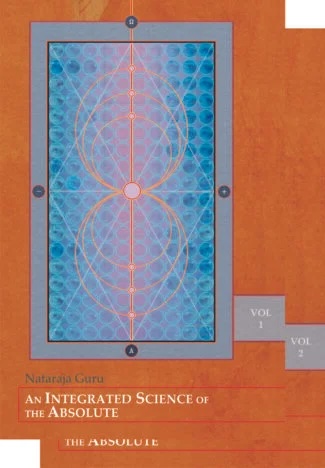
Narayana Gurukula is founded on the teachings of Narayana Guru while recognizing and respecting the teachings of all Gurus, philosophers, and spiritual masters, past and present, across the world. From the Vedic period onwards, all the philosophical schools and traditions in India have taught us, in their own language and style that the same truth manifests as the individual and the universe. Socrates, whose philosophical teachings can be considered as the basis for Western Thought, also said, “Know thyself.” Jesus Christ, Prophet Muhammad and the mystics of Judaism also revealed this truth in the language and style of their time and clime. If so many masters and prophets have taught and revealed this truth, why Gurukula, its Gurus and associates repeat the same words and revelations through their words and writings? Truth never changes. But the capacity of man to understand and appreciate the unity of Truth is constantly being modified and even challenged by the cultural, linguistic, social and psychological situations he finds himself in. Therefore, the unity of Truth has to be emphasized continuously by restating and revaluing the teachings of the great masters of the past. Narayana Guru not only revalued and restated the wisdom of the Upanishads in a logical and scientific manner that is in tune with western philosophy and science but also showed how this integrated vision can be lived here and now. When the prophetic religions were spread and disseminated from their lands of origins to other parts of the world and distant cultures numerous conflicts, crusades and blood shedding happened. The religions that originated in the Indian subcontinent also had their share of conflicts and even violent outbursts throughout history, even though they tend to solve issues through hair-splitting logical arguments and debates. The most sublime philosophical visions of Hinduism were distorted and misinterpreted to justify discrimination and cruelty towards fellow human beings because of their lower status in the caste hierarchy. Guru knew that the history would be repeated. Therefore, to normalize the individual consciousness and to prepare fellow humans to understand the unity of Truth that resides at the core of religion Guru wrote ‘One Hundred Verses of Self Instruction.’ He summed up the meaning of verses 44 – 49 by saying, “whatever the religion, it suffices if it makes man happy.” He also said, “One Caste, One Religion, One God for mankind.” The origin and full implication of such statements are only understood if we study Guru’s works. Most of his writings are in Malayalam, a language spoken by a small population in India, and in Sanskrit, the language of Upanishads and Vedas. Even for a person who is fluent in these languages it may be difficult to understand the inner meaning of Guru’s works because of its philosophical depth and mystical quality. Therefore, later Gurus of Gurukula wrote commentaries on all his works. These works are being studied, understood, and disseminated by many people all over the world.
In summary, instead of establishing a new religion and being a custodian of the same, Gurukula is teaching us how Narayana Guru realized the One Truth that is at the core of all religions. Realizing this ‘Oneness’ and Self-realization are essentially the same. The universality of such a realization is the foundation for world citizenship. It is in this light we must see Gurukula and the Gurus. Gurukula brings all the subjects of interest to mankind in its purview. Nothing is outside its scope. Yet, it understands all subjects in light of the integrated science of the Absolute. The message that Narayana Gurukula disseminates is Truth or the Absolute (God) is not proprietary. It does not belong to one or the other religion, or to any group or ideologies. It is the essence of all, yet it is free from all.